
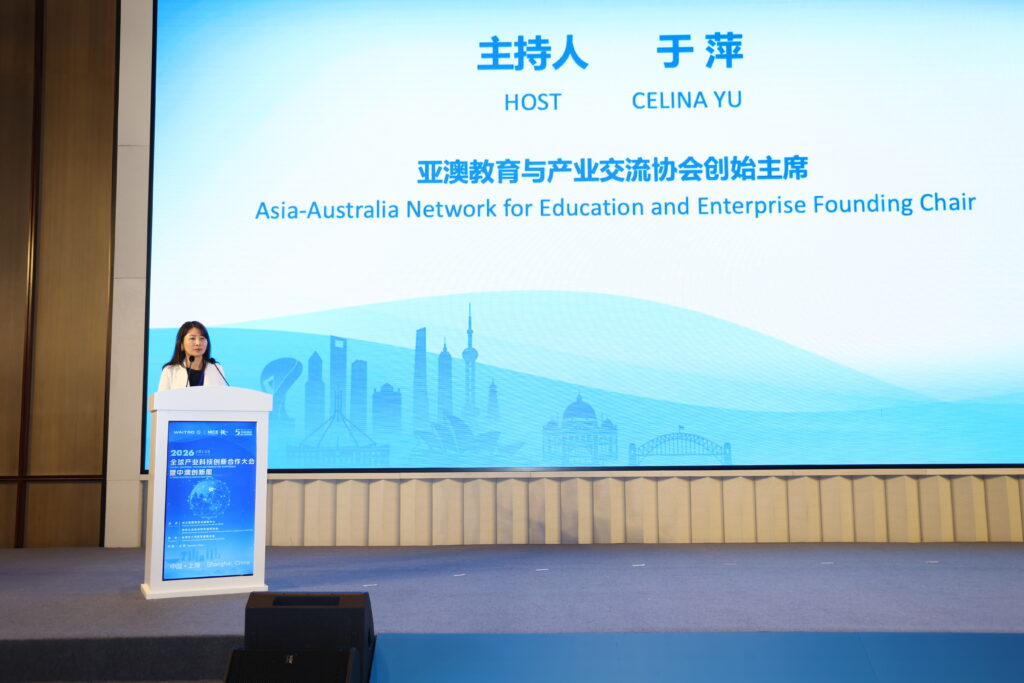
The 2026 Global Industrial Technology Innovation Cooperation Conference and China-Australia Innovation Week was held in Shanghai, with AANEE Founding Chair Celina Yu serving as the core session moderator.
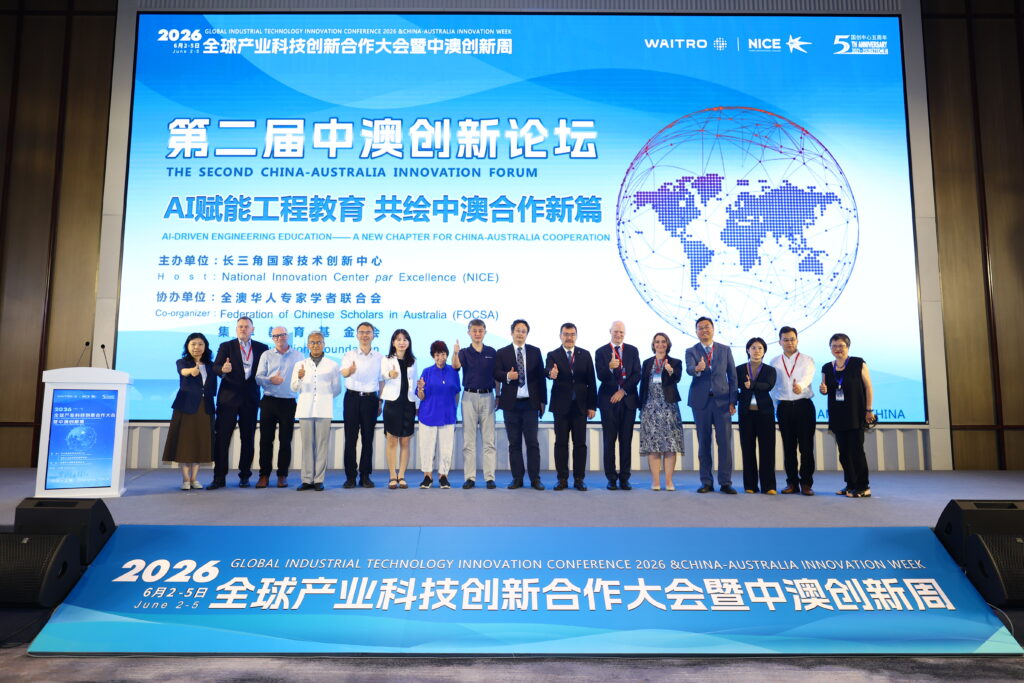
From June 1 to 3, 2026, the 2026 Global Industrial Technology Innovation Cooperation Conference and China-Australia Innovation Week were successfully held in Shanghai. Celina Yu, Founding Chair of the Asia-Australia Education & Industry Exchange Association (AANEE), was invited to moderate the afternoon session on June 2, titled “AI-Driven Engineering Education — A New Chapter for China-Australia Cooperation.“
The tone of this dialogue was set early on the evening of June 1 at the China-Australia Young Scholars Forum dinner hosted by the University of Shanghai for Science and Technology. In his address, Professor Max Lu, Vice-Chancellor of the University of Wollongong, reminded the audience that we are in the most exciting era of scientific innovation, where AI has the capacity to dramatically shorten the path to goals. However, researchers must always keep the big picture in focus, uphold positive values, and deliver real value. These words carried from the dinner into the forum, becoming the invisible thread running through all subsequent discussions.
On the afternoon of June 2, five speakers from the front lines of Chinese and Australian universities and industry took the stage in succession, unpacking how AI can truly reshape engineering education across five dimensions: leadership, the classroom, pedagogy, engineering tools, and assessment trust.
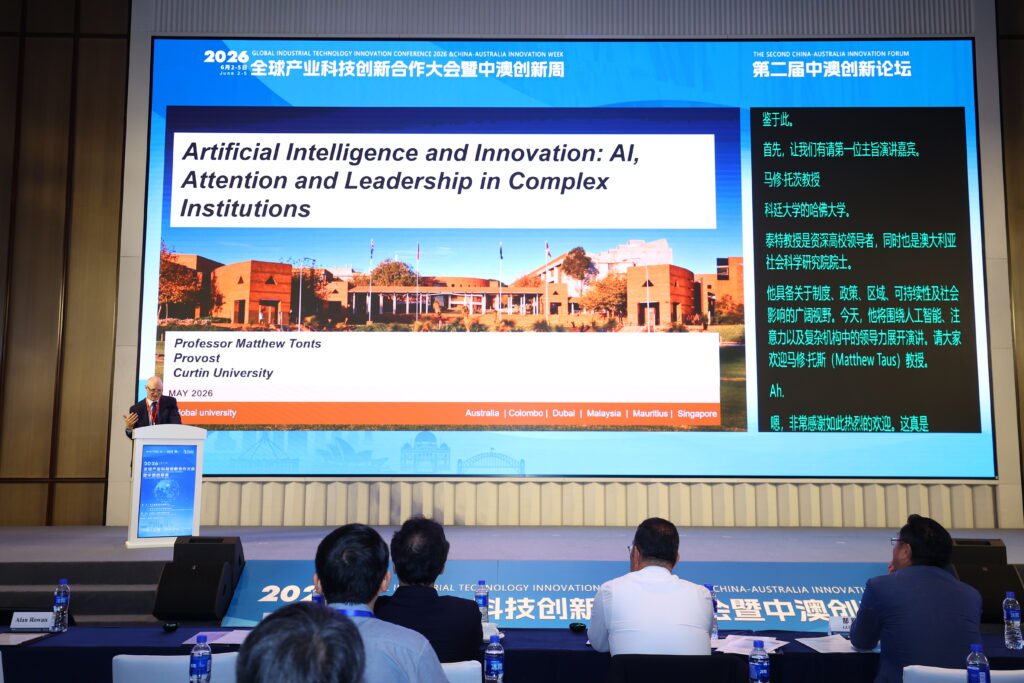
Matthew Tonts, Provost of Curtin University, was the first to define AI as a “leadership challenge” rather than a purely technical one. He pointed out that modern universities are not short of information; what they lack is attention. The real value of AI lies not in boosting efficiency, but in helping leaders filter noise and capture weak signals within complex institutions, thereby creating more space for human judgment. He emphasized that meaningful innovation begins with identifying the right questions, not with providing answers faster.
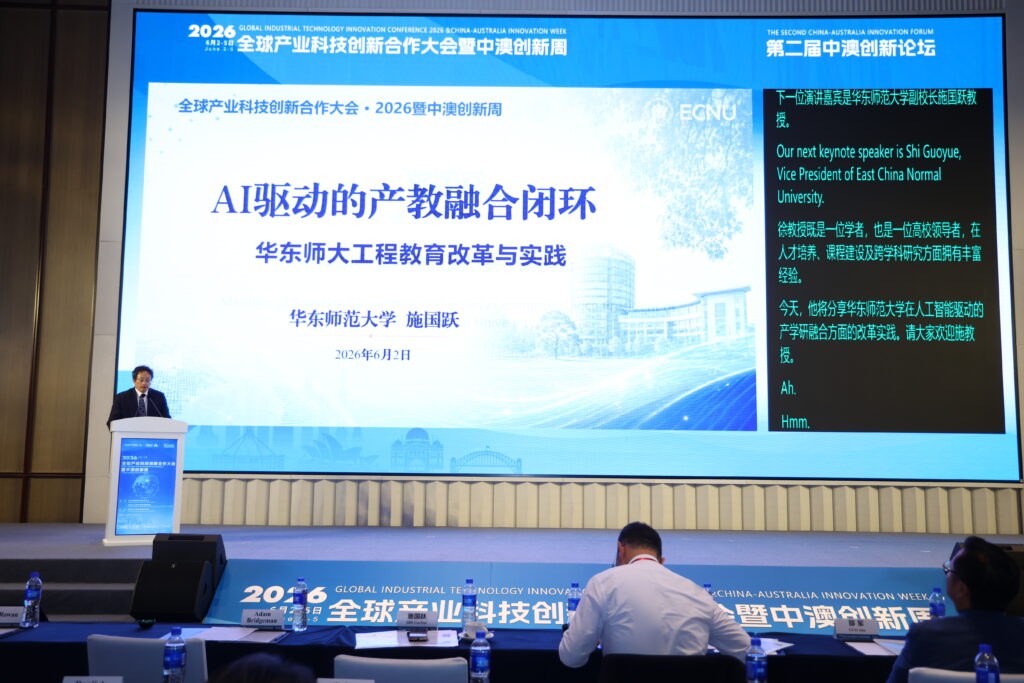
Shi Guoyue, Member of the Standing Committee of the Party Committee and Vice President of East China Normal University, then brought the perspective back to local practice. Facing the dual challenges of “industry-education disconnect” and the “human-machine capability gap,” he proposed a closed-loop ecosystem of “enterprise poses questions, university and enterprise answer together, and the market evaluates the results.” He advocated using real industrial problems as the starting point for education, breaking disciplinary boundaries through “AI+X,” and transforming engineering education from a static transmission model into a dynamic system that co-evolves with industry.
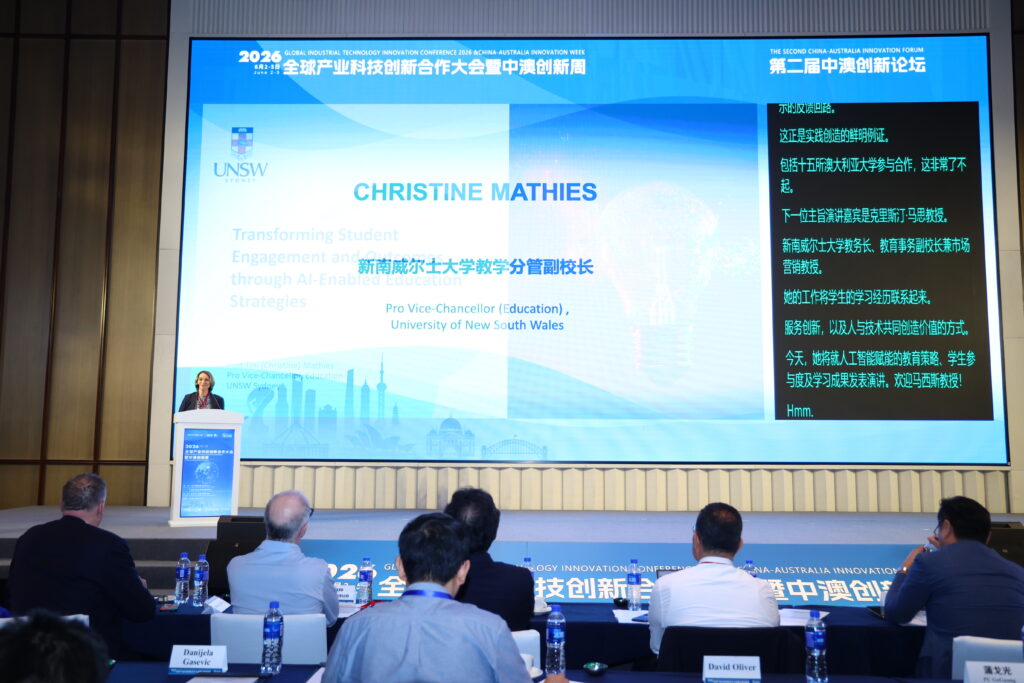
Christine Mathies, Pro Vice-Chancellor (Education) of UNSW Sydney, brought the most penetrating framework of the session: moving from panic to pedagogy. She traced the historical pattern of educational panic triggered by new technologies such as paper, railways, television, and the internet, pointing out that AI is not an unprecedented threat. Universities should not simply block or allow it; they should actively shape it. They should internalize AI capabilities as a basic attribute of graduates, shift the focus of assessment from “measuring output” to “validating real capability,” and ensure that the credibility of degrees is always built on human judgment and ethics.
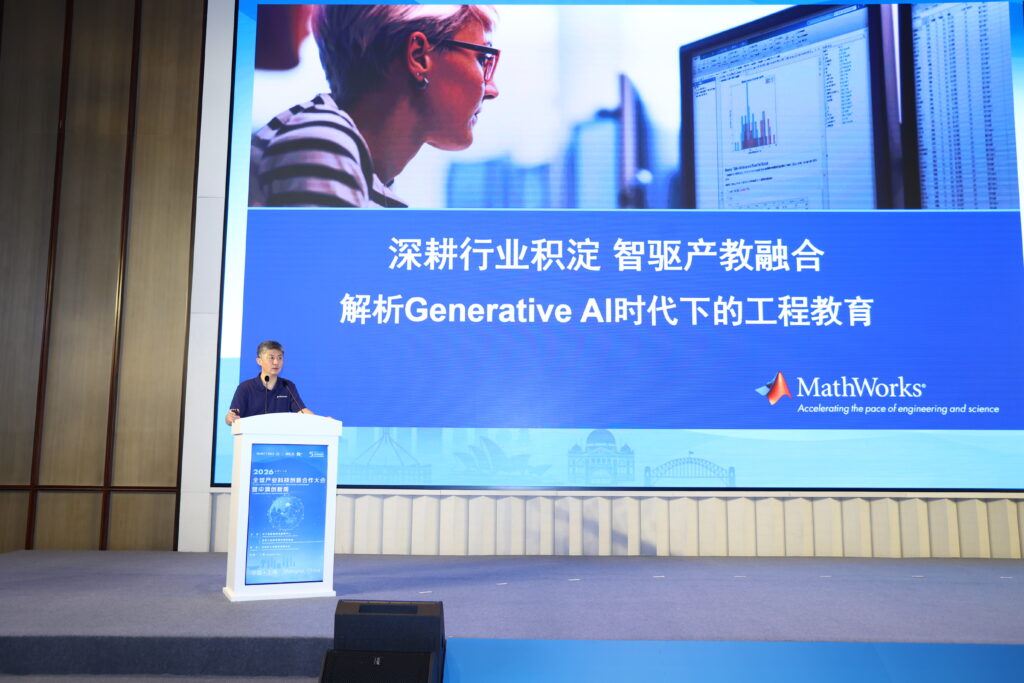
Jason Li, Chief Technology Officer of MathWorks China, brought a sober voice from the engineering front lines. He pointed out that engineering AI and consumer-grade AI are fundamentally different: the latter pursues generation speed, while the former must meet stringent standards of reproducibility, traceability, verifiability, and simulatability. Future engineers should not stop at using ChatGPT; they must possess systems thinking and engineering judgment. AI should be embedded as an “engineering accelerator” within deterministic workflows, rather than replacing engineering methodology itself.
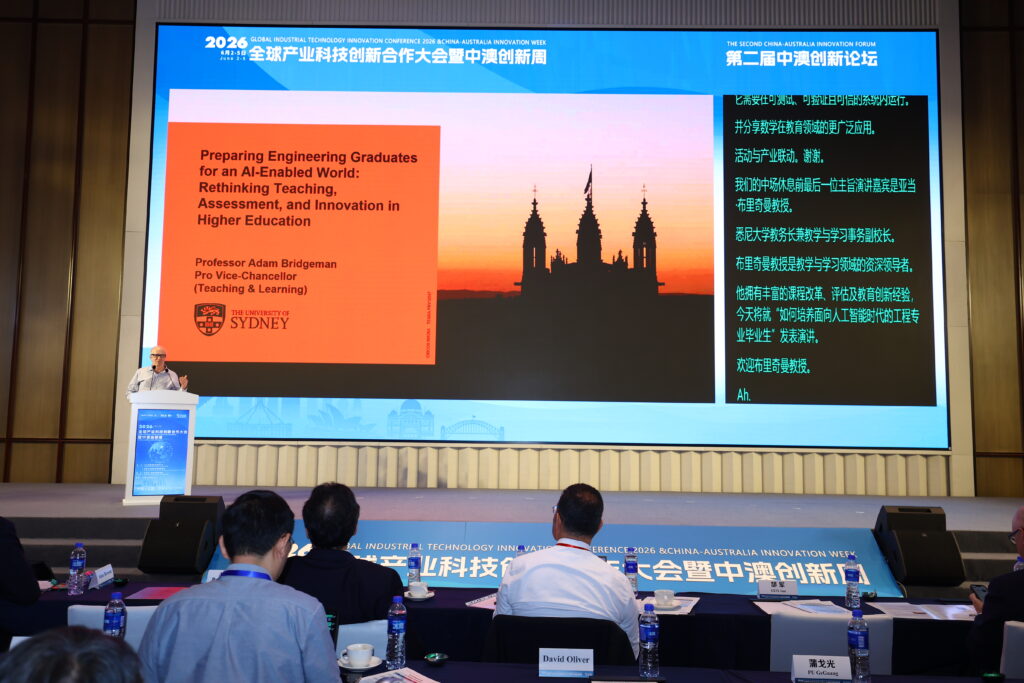
Adam Bridgeman, Pro Vice-Chancellor (Teaching and Learning) of The University of Sydney, closed the session with the theme of “trust.” He pointed out that the greatest challenge for higher education in the AI era is not technology adoption, but maintaining societal trust in student capabilities and the value of degrees. He proposed a “two-lane assessment” model, where secure and controllable independent capability verification runs in parallel with AI-assisted learning under open support. Through the Cogniti case, he demonstrated that AI can be shaped and guided by teachers. The ultimate goal is to shift from “knowledge acquisition” to “capability demonstration,” allowing technology to enhance educators rather than diminish their role.
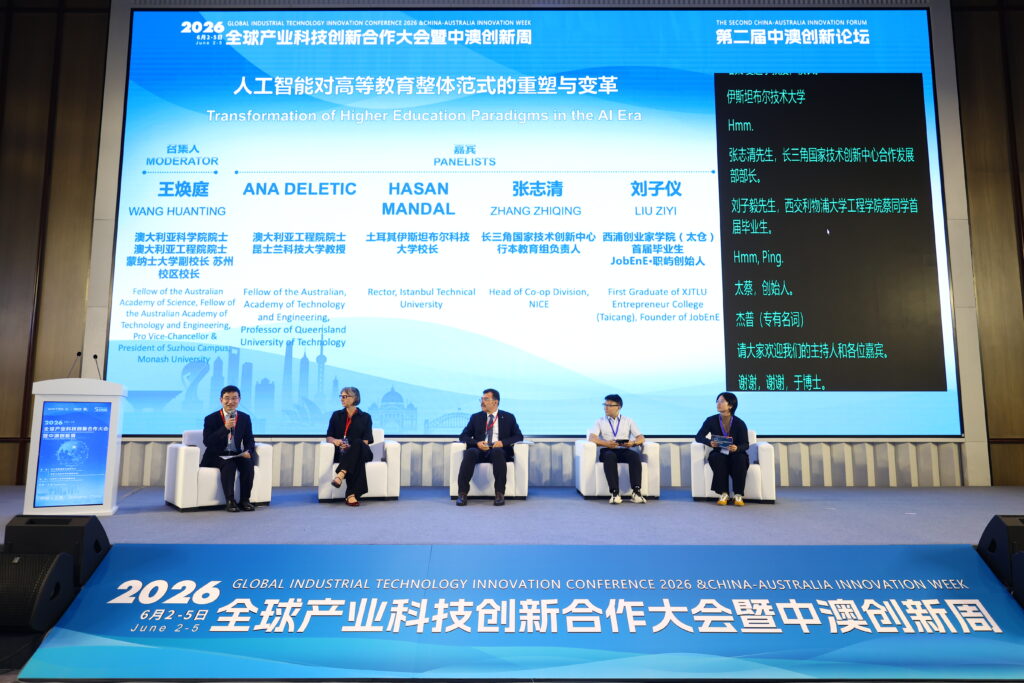
Following the keynote speeches, two roundtable discussions pushed these reflections toward implementation. Professor Wang Huanting, Pro Vice-Chancellor and President of Suzhou Campus at Monash University, Fellow of the Australian Academy of Science, and Fellow of the Australian Academy of Technological Sciences and Engineering, and Professor Yan Junchi, Deputy Dean of the School of Artificial Intelligence at Shanghai Jiao Tong University, respectively moderated discussions with Chinese and Australian academicians and representatives from universities and industry on “Transformation of Higher Education Paradigms in the AI Era” and “In-depth Influence of AI on Education in Specialized Fields.”
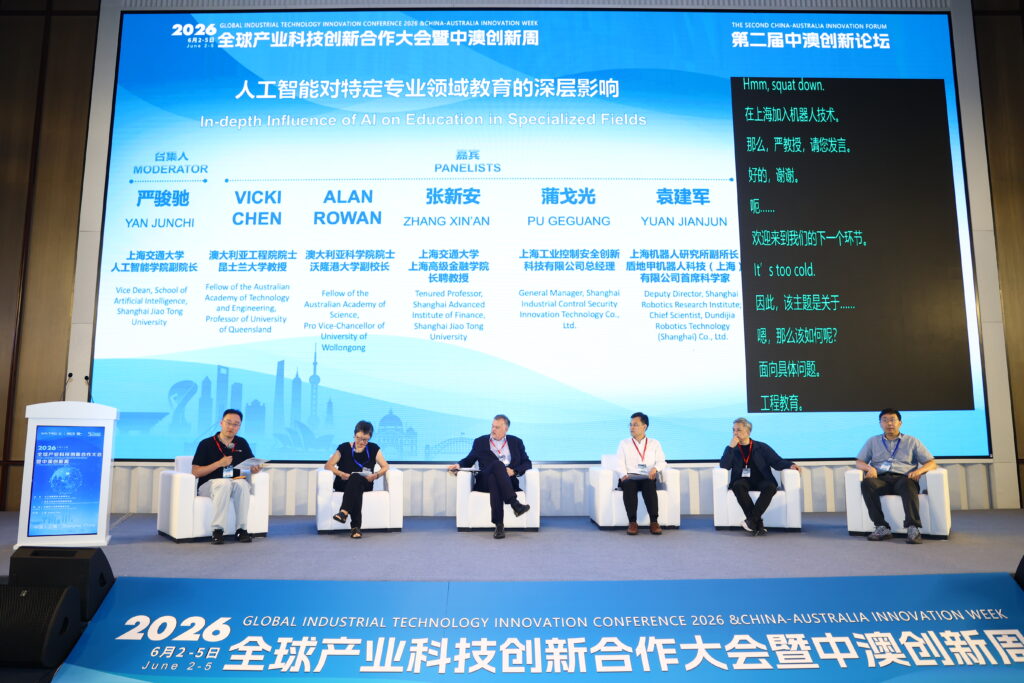
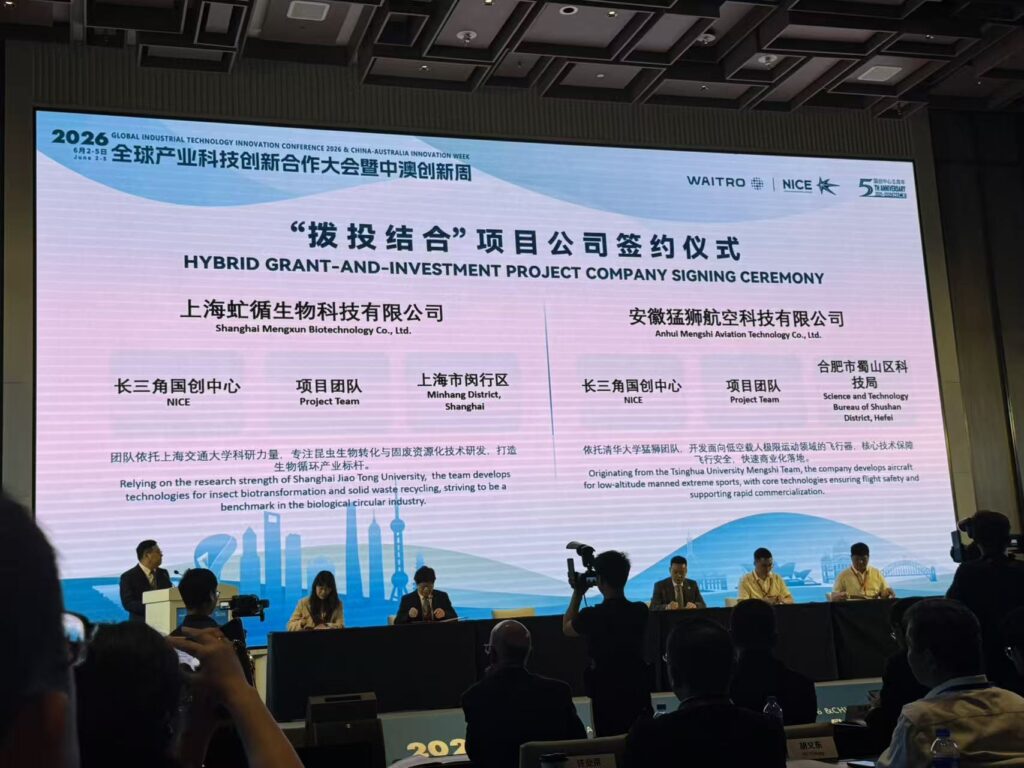
This session was part of the 2026 Global Industrial Technology Innovation Cooperation Conference and China-Australia Innovation Week, led by the National Innovation Center for Technology (NICE) and co-organized by the Federation of Chinese Scholars and Professionals in Australia (FOCSA). During the event, the China-Australia Young Scholars Forum, the Green and Low-Carbon Technology Sub-forum, and multiple strategic partnership signings were also held.
“The consensus that struck me most throughout the forum was that research creativity does not automatically translate into implementation; technology transformation relies on trust-based connections and pragmatic cooperation,” Celina Yu remarked. “This is precisely the direction AANEE is committed to: bridging the implementation chain between education, industry, and cross-border innovation, so that good ideas can truly generate impact.”